Product · UX · data
Laurel: a social layer for academic competitions
LinkedIn meets ESPN for spelling bees, Science Olympiad and debate. I prototyped the social features (live scores, profiles, a network feed) for a startup's CEO using rapid AI build tools.
- Role
- Product & data analyst · UX prototyping
- Timeline
- Summer 2025
- Tools
- Builder.io, Figma, Databricks
The context
I joined an EdTech startup building a results and rankings platform for K–12 academic competitions: spelling bees, Science Olympiad, debate, math leagues, quiz bowl. It serves students, parents, teachers and school administrators. My first job was data: crunching and validating school records in Databricks so rankings and results could be trusted.
When the CEO found out I could design, my role grew. I was asked to test rapid AI prototyping tools and use them to show what the platform could become. The product name and brand are left off here; the screens are rebuilt with made-up data.
The idea
Academic competitors work as hard as athletes, but their wins disappear into PDFs of results. The pitch was LinkedIn meets ESPN: live scores and rankings like a sports app, plus profiles and a feed so students, coaches and schools can follow each other and get recognized.
What I prototyped
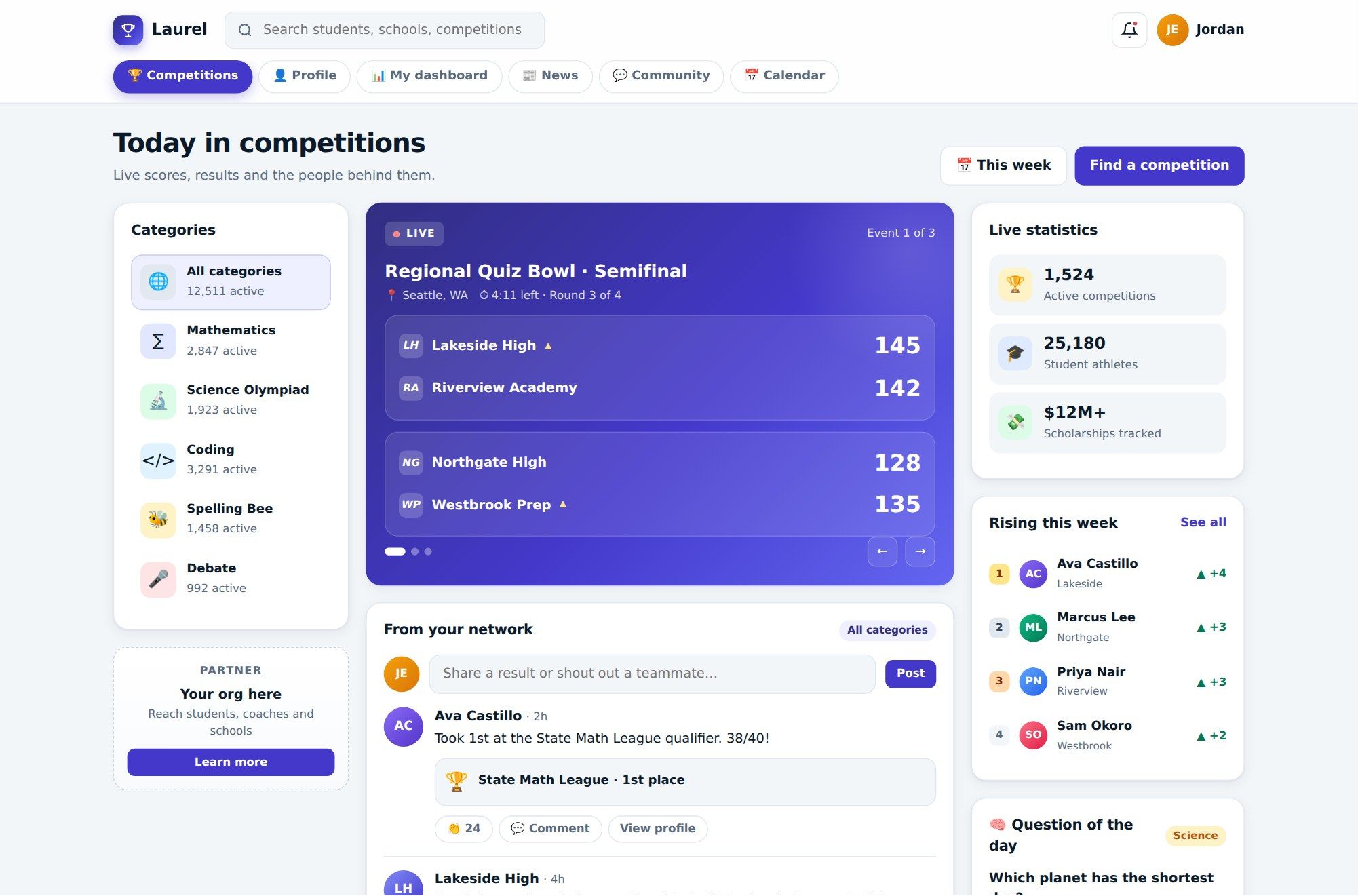
- Live homeA scoreboard that updates during events, categories that filter everything, and a feed of results from people and schools you follow.
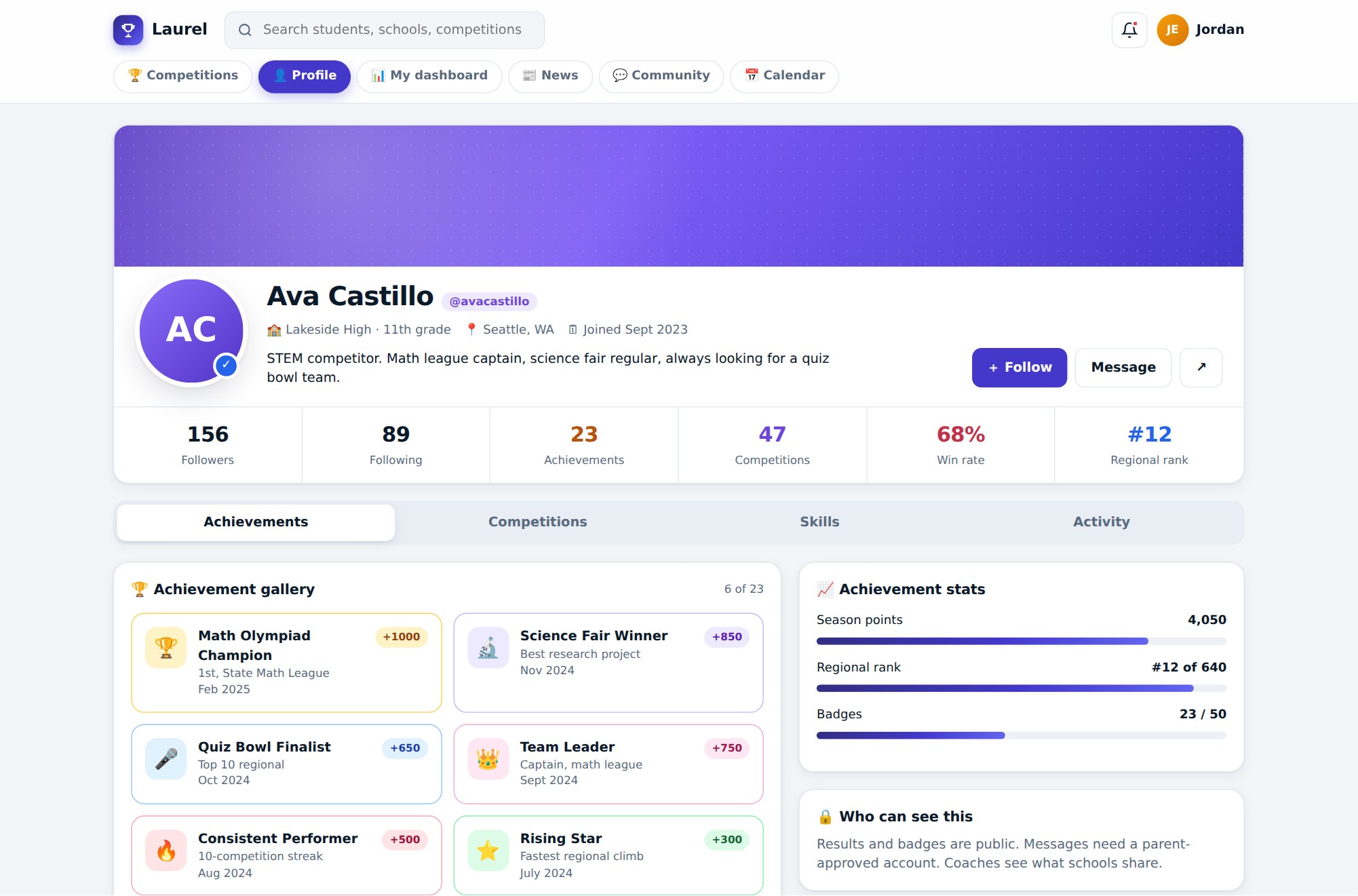
- Student profileStats up top (followers, win rate, rank), then achievements, competition history and skills, the "résumé" a coach or college would want.
- Personal dashboardSeason stats, social reach, a score trend, goals and upcoming events with one-tap registration that notifies the coach.
Try the prototype
Open full screen ↗ · Try flipping through live events, answering the question of the day, following Ava and registering for an event. Sample data only.
Design decisions
Borrow the sports grammar. Live tags, scores that tick and “rising this week” make academic events feel like something to tune into, not a results PDF you download later.
Profiles are earned, not filled in. Most of a profile comes from verified results, which is where the data work mattered. Badges and rank can’t be typed in.
Built for minors. Messaging between students requires a parent-approved account, and what coaches and schools can see is spelled out on the profile itself.
Data + design
Validating school data first shaped the prototypes: I knew which fields were reliable enough to show publicly (results, placements, schools) and which weren’t (self-reported stats). That’s why rankings and badges come from results, not user input.
Into the product
My Builder.io prototypes were ported into the CEO’s Figma files, and the engineering team built from them while I worked alongside, answering questions and adjusting designs as they went. The social features shown here were incorporated into the live platform; the engineers built them, from these designs.
Outcome
The CEO used the prototypes to show where the product was headed, and the team built from them. It also proved the method: a working, clickable prototype in days got leadership aligned faster than specs or static mockups.